Manuel Baeza

Submitted by brandcode_deweloper on
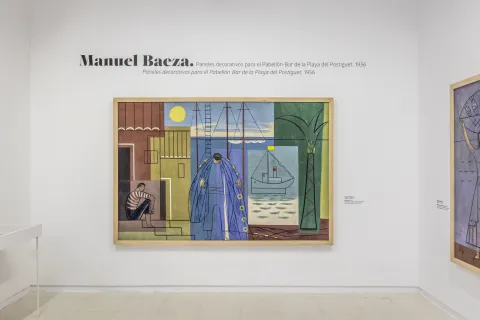
Decorative panels for the pavilion-bar of Playa del Postiguet, 1956

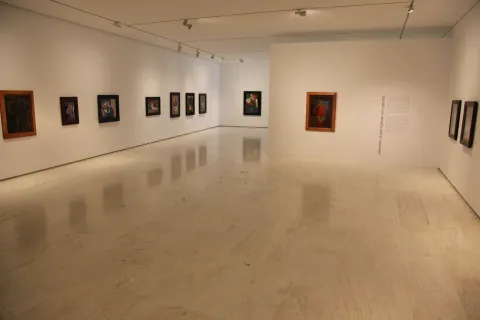
The MACA presents the restoration and research of a set of 3 decorative panels created by painter Manuel Baeza for the changing room pavilion at Playa del Postiguet in Alicante.

In 1956 the Alicante City Council built bathing pavilions on Postiguet beach, and commissioned the already nationally recognized Alicante artist Manuel Baeza (1911-1986) to create five large-scale pictorial panels. Only these three have been preserved.

The works remained on display in the restaurant from 1956 until these structures were demolished. After this, the panels were forgotten for several decades until the Culture department stored them in its warehouses. They had serious deterioration affecting all their layers: supports disintegrated and weakened by the high relative humidity to which they had been exposed due to their proximity to the sea, and dirt of various kinds, as well as dense and oxidized varnishes that covered the paint layers.

Recently they were transferred to the Conservation and Restoration Department of Modern and Contemporary Art at IVCR+i in Valencia. After being researched and analyzed, they were restored, consolidating and stabilizing the agglomerated wood supports, and removing each of the added layers that covered them. The cleaning was carried out in three consecutive differentiated phases. As a conservation measure for the works, a wooden frame-box made of linden wood was designed and created, which without any anchoring system to the support reinforces the entire structure of the panels and gives them stability.

These recovered works, which are part of the collective memory of Alicante's citizens, return to their city and can be visited at the MACA until January 9th.
EXPO-0025
Imagen
3F1A2330.jpg
Manuel Baeza
Rosa María Castells
Paneles decorativos

Eusebio Sempere/Abel Martín. The Music of Numbers That Do Not Exist

Submitted by brandcode_deweloper on
Sempere Collection of the MACA


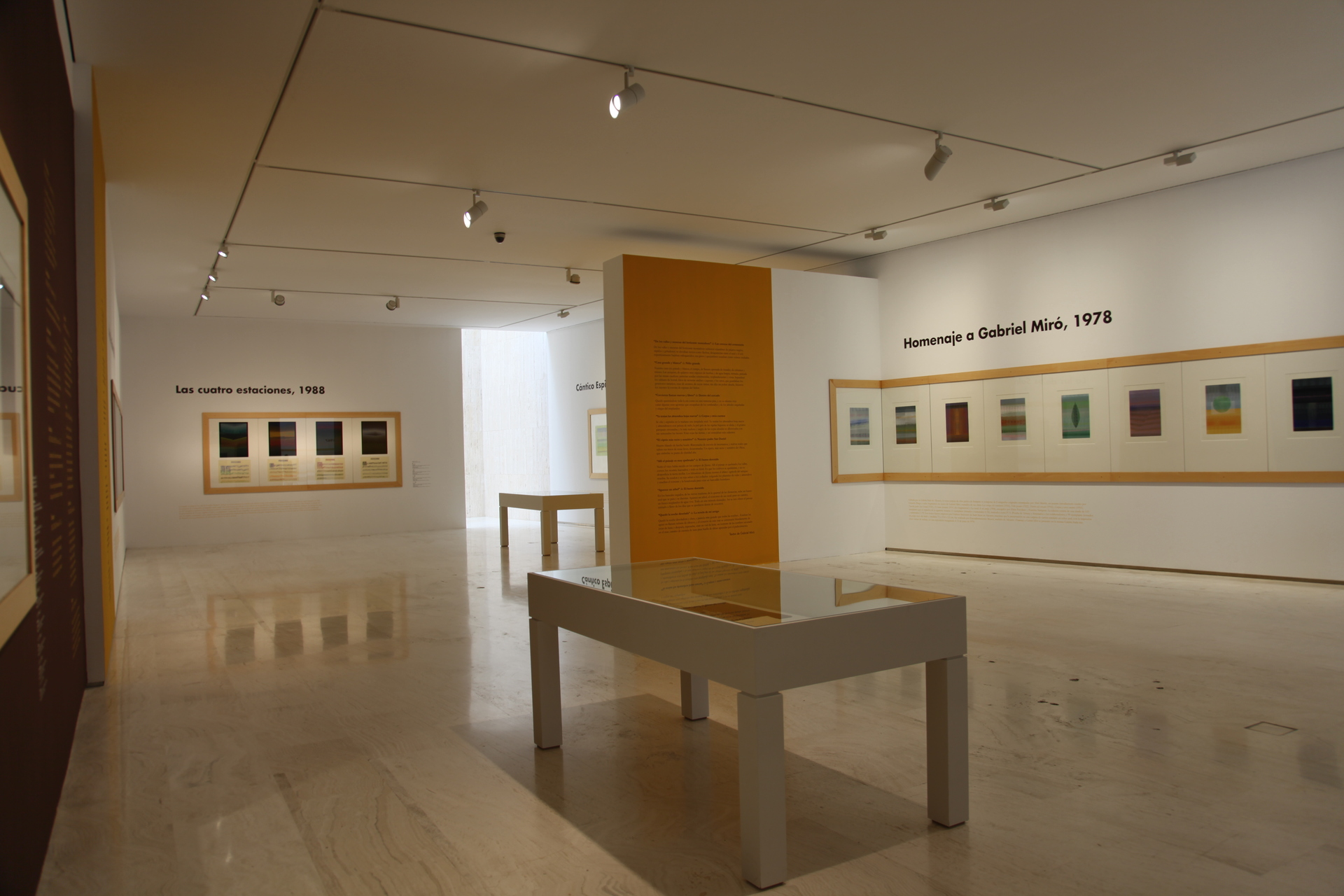
The Four Seasons of 1965 is the first portfolio of artistic silkscreens printed in Spain. It was 50 years ago and the presentation at the Juana Mordó Gallery became an unprecedented success with the public, critics, and sales. It was the beginning of one of the most important sets of graphic works created in twentieth-century Spain, that of artist Eusebio Sempere, exceptional both for its quality and its quantity. Approximately two hundred works among silkscreens, lithographs, and engravings, elaborated by hand in which the highest levels of meticulous perfection are achieved and sometimes, precious craftsmanship.

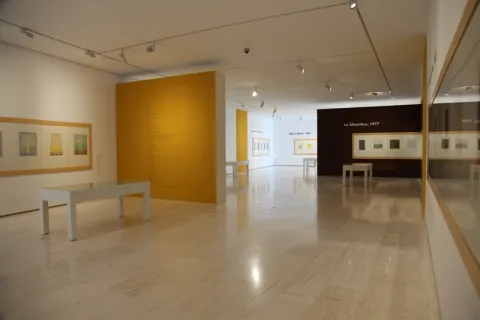
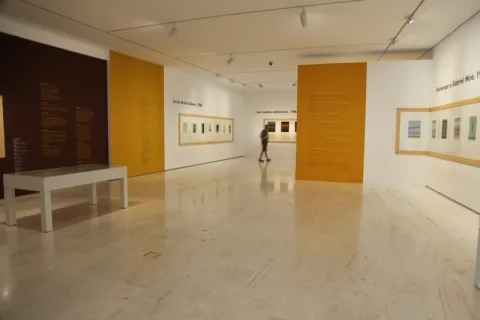
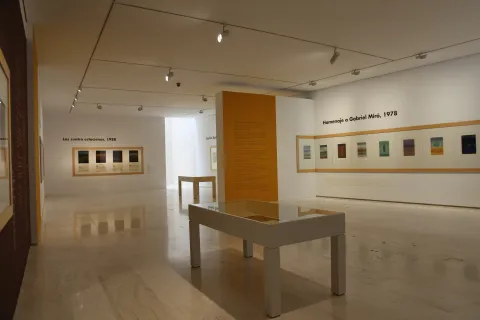
Nine portfolios of original silkscreens by Eusebio Sempere are presented, all printed by Abel Martín, as if it were a team effort, which trace the vital trajectory of both artists and demonstrate their joint artistic collaboration, the union and spiritual communication. Sempere would be the mind behind the forms and colors that Abel Martín, an excellent printer, then captured on paper through the superposition of silk screens, one for each of the colors used. Sometimes more than 40.

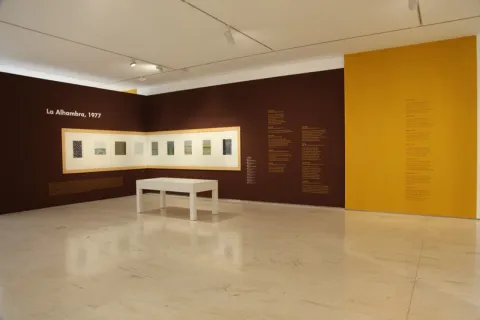
The Four Seasons of 1965, Nayar Album of 1967, Alarm Book, Transparency of Time or The Alhambra of 1977, Homage to Gabriel Miró of 1978, The Light of the Psalms of 1980, Spiritual Canticle of 1982 or the posthumous portfolio of The Four Seasons of 1988 that Abel Martín completed alone, combine the music of numbers that do not exist with the precise literature for each line.

All the portfolios are accompanied by literary texts, experimental, avant-garde, classical or mystical. Pedro Laín Entralgo, Julio Campal, José Miguel Ullán, Edmond Jabés, the Arab poets of Granada, Gabriel Miró, the biblical psalms or Saint John of the Cross presented in turn by Rafael Alberti, Gerardo Diego, Vicente Aleixandre, Juan Cantó or Vicente Aguilera Cerni, words kindled in the forms and colors that inspire souls with the desire to stay there and take a seat.


EXPO-0024
Imagen
Alt
Eusebio Sempere y Abel Martín.
Rosa María Castells
From February 2 to April 17, 2016. Valencia. Centro del Carmen. From April 5 to May 20, 2018 at the National Chalcography of the Royal Academy of Fine Arts of San Fernando. Madrid.

The Revelation of the Painting

Submitted by brandcode_deweloper on
Mediterranean Foundation Collection

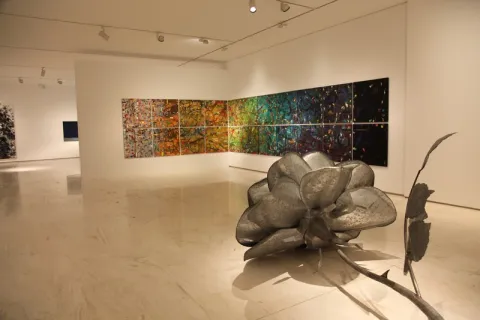
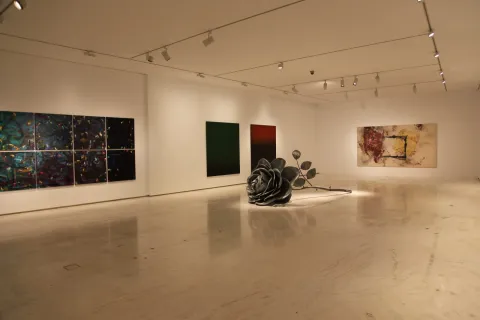
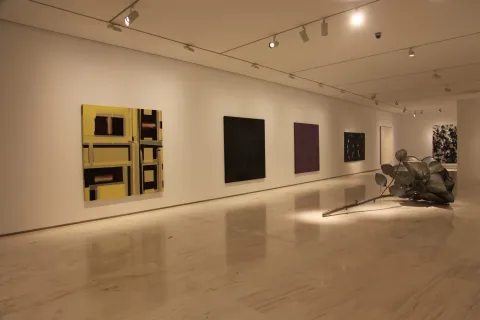
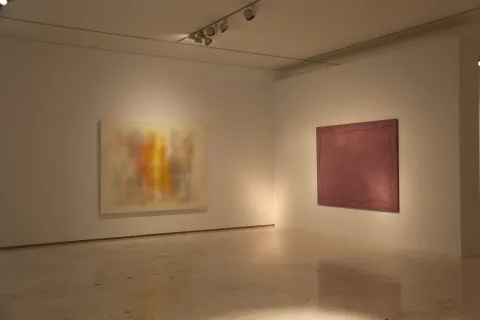
The revelation of painting… brings together a selection of works by different artists who share a passion for painting. Is it possible to speak of painting in the 21st century? To speak painting or of painting? Painting itself seems to stop at the border of a surface configured by two variables. Chemistry and gesture. The reactions of chemical elements such as color pigments, binding substances and additives, volatile or solid, synthetic or natural, are the scientific proof that painting exists. The way of applying this colored compound of pasty or liquid consistency is what shapes the gesture and captures time, always fragmented. But it will be the gaze (of the painter and the spectator) that grants "meaning" to the result.

Painting, that "accidental surface," perhaps of dramatic intensity, is revealed in this exhibition as present in some paintings as it is absent in others. A window through which to penetrate an immaterial world or a textured wall where one can appreciate the folds of matter. Forgetting the object of representation and the spell of text or texture. The imperceptible brush and a certain sensation of watery transparency. Artists who through painting established a way of looking at the world that has shaped our contemporaneity. 

EXPO-0023
Imagen
IMG_1363.jpg
/sites/default/files/inline-images/resources/exposiciones/EXPO-0023/folleto-la-revelacion-web_8.pdf
Alfonso Albacete, Sergio Barrera, José Manuel Ciria, Susy Gómez, Joan Hernández Pijuán, Prudencio Irazábal, Oliver Johnson, Carlos León, Antonio Mesones, Nicolás Munuera, Juan Olivares, José María Sicilia y Jordi Teixidor.

Rosa María Castells
Obras de la Colección Fundación  Mediterráneo

Joan Miró and Joan Baixas. Mori el Merma in Alicante

Submitted by brandcode_deweloper on

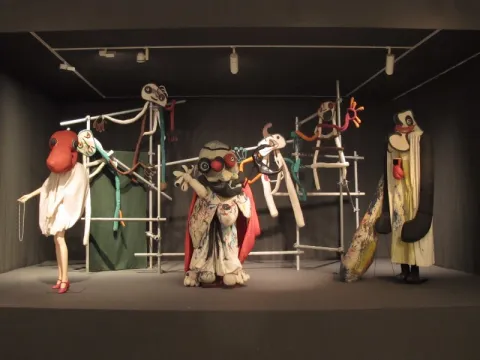
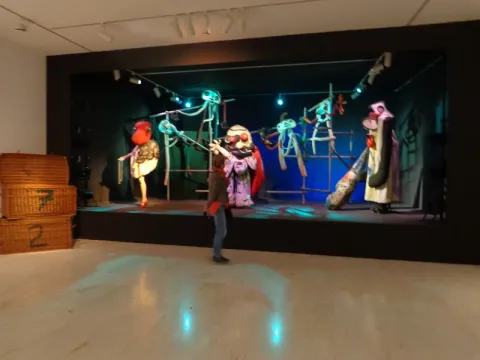
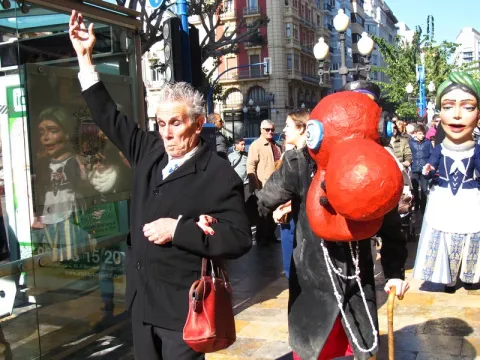
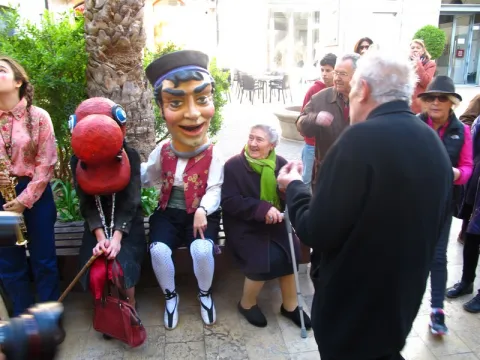
Mori el Merma was a theatrical spectacle by the Teatre de la Claca company directed by Joan Baixas and Teresa Calafell with sets, masks and large puppets designed and painted by Joan Miró. For several months, Miró collaborated in the design of the characters constructed in fabric and foam rubber by the group and in March 1977, in La Claca's own workshop and as one more member of the group, he proceeded to paint and decorate them. The adventure was recorded by the attentive camera of Francesc Catalá Roca. After months of rehearsals, the work premiered in 1978, first at the Teatro Principal in Palma de Mallorca and later at the Gran Teatro del Liceo in Barcelona. The success was resounding and clamorous. This chaotic and anarchist "troupe" was the image of a new country that had finally ended the dictatorship. In the first two years, from 1978 to 1980, Mori el Merma was performed throughout Europe: at the Centre Pompidou in Paris, at the Riverside Studios in London, at the Fondation Maeght in Saint Paul de Vence or at the Sala Olympia in Madrid.

The importance of Mori el Merma in Joan Miró's production is capital: it is not just another of his forays into the theatrical scene, an artistic aspect for which he felt genuine passion. It is the representation of the character of Ubú conceived by Alfred Jarry, paradigm of all the dictators of the twentieth century, the vulgar and bloodthirsty tyrant who embodies corruption and despotism and whom Miró associated with General Franco. The character of Ubú, which Miró develops plastically through a series of drawings and three portfolios of lithographs, takes the stage with the work of Mori el Merma thus collecting his political ideology, transversally bathed in surrealism.

The history of the Mori el Merma puppets in Alicante is complicated but fascinating. When in 1980, La Claca dismantled the work to undertake a new stage, Miró agreed to the sale of the initial sets: part of which were deposited in the Miró Foundation in Barcelona and another part, thanks to the efforts of Alicante artist Eusebio Sempere, were acquired by the Diputación of Alicante with the purpose of completing the Twentieth Century Art Collection. Meanwhile, the sets were exhibited in 1980 at the Museo de la Asegurada, not without friction between the artist and the City Council as recorded in the press. After fourteen months of exhibition they were dismantled and stored in wicker baskets that were removed by the Diputación in 1988 where they have been preserved ever since. They were never exhibited again.

EXPO-0022
Imagen
Sin-t%C3%ADtulo-11.jpg
/sites/default/files/inline-images/resources/exposiciones/EXPO-0022/folleto-mori-el-merma-baja_8.pdf
Rosa María Castells
Del 11 de junio al 13 de septiembre de 2015

Invisible Landscapes

Submitted by brandcode_deweloper on
Mediterranean Foundation Collection

Michel de Certeau, French philosopher, in "The Practice of Everyday Life" when he speaks of the "invisible identities of the visible," makes a proposal very much in tune with photography. He proposes that what is seen in the urban landscape is always an indication of what has already disappeared, that the visible designates what is no longer there.

The idea of photography as a mere reflection of reality has been surpassed today by most of the artists working in this field. In their works they reflect not only the photographed instant, but situations, moments some from a past no longer evident or images that indicate or suggest to us facts, situations, suspicions, even states of mind.

Both Xavier Ribas with his work Invisible Structures, (2006) and Javier Codesal with The Lost Mountain, (2003) speak to us, from an anthropological point of view, about memory and absence, with a certain evocative character of what has already been lost.

EXPO-0021
/sites/default/files/inline-images/resources/exposiciones/EXPO-0021/Hoja-sala-Paisajes-Invisibles_8.pdf
Xavier Ribas y Javier Codesal.
Rosa María Castells

Telefónica Cubist Collection

Submitted by brandcode_deweloper on
Regarding a Juan Gris

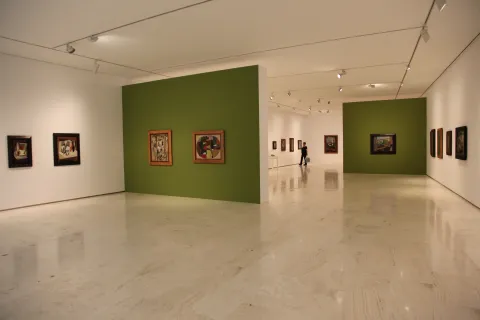
Cubism was more than an avant-garde movement; it was the artistic movement that inaugurated modernity. There was not a single cubism but many cubisms. Founded in Paris at the end of the first decade of the twentieth century by Braque and Picasso, its temporal limits extend beyond the 1920s, when other artists joined to redefine it.

Cubism proposes a revolutionary way of painting based on an intense work of deconstructing reality, of renouncing conventional perspective, of absence of details and of geometrizing forms. By modifying the way of depicting the nature of everyday objects, cubism changed forever the way of looking at painting: now the viewer must traverse planes, lines and colors, arranged according to their own rhythm that demands not only sensory contemplation, but also an intellectual exercise of reconstruction. An aesthetic legacy that has endured over time.

The exhibition is structured in three areas. We open the exhibition with the work of contemporary artists who worked in Paris, the vision of other cubisms, and we close the exhibition with the international expansion of the movement, reflected in the presence of Spanish and Latin American artists. The nucleus of the collection, which occupies the central space of the exhibition, consists of 11 exceptional pieces by the Madrid-born artist Juan Gris.
Juan Gris is the painter of mystical geometry and this is how Eusebio Sempere discovers and admires him when in 1977 he acquires, with great economic effort, the canvas Still Life with Napkin that we preserve in the Art of the Twentieth Century Collection of this Museum of Contemporary Art in Alicante (MACA) and which became the first Juan Gris exhibited in a Spanish public collection. This exhibition serves as a tribute to such generosity.
 

EXPO-0020
Imagen
IMG_5687.jpg
/sites/default/files/inline-images/resources/exposiciones/EXPO-0020/folleto_cubismo_8.pdf
Albert Gleizes, Vicente do Rego Monteiro, Manuel Ángeles Ortiz, Joaquín Torres García, Louis Marcoussis, María Blanchard, André Lhote, Georges Valmier, Alejandro Xul Solar, Rafael Barradas, Jean Metzinger, Emilio Pettoruti, Juan Gris, Vicente Huidobro y Joaquín Peinado.
Laura Brogueras, Rosa María Castells
Colabora: Consorci de Museus de la Comunitat Valenciana y Diputación de Alicante

Sempere and his circle in the Mariano Yera collection

Submitted by brandcode_deweloper on

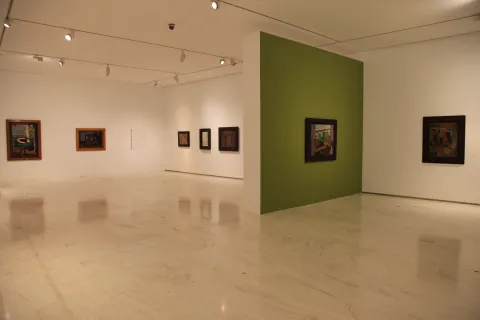
The Mariano Yera Collection follows the evolution of art history in Spain, as the main pictorial currents and their most outstanding authors are represented. It consists of more than one hundred and forty works of great quality, all of them expressive of the particular perspective of each of the sixty-three artists that make up this singular testimony of Spanish pictorial creation from the 1950s of the last century until the end of the twentieth century, a period rich in artistic proposals of enormous relevance. A selection closer to the Sempere generation is the one shown at the MACA.

EXPO-0019
Imagen
IMG_4103.jpg
/sites/default/files/inline-images/resources/exposiciones/EXPO-0019/DIPTICO_8.pdf
Miquel Barceló, Miguel Ángel Campano, Equipo 57, Equipo Crónica, Luis Feito, Luis Gordillo, José Guerrero, Josep Guinovart, Manuel Millares, Lucio Muñoz, Pablo Palazuelo, Manuel Rivera, Eusebio Sempere, Antoni Tàpies, Antonio Saura y Jose María Yturralde.
Felipe Garín Tarancón
Obras prestadas por la Colección Yera

Over time 2

Submitted by brandcode_deweloper on
Mediterranean Foundation Collection

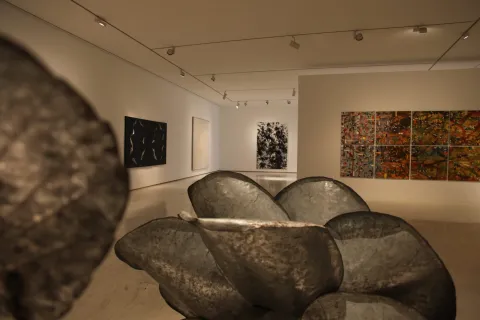
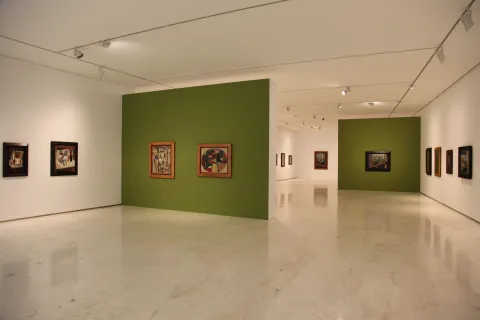
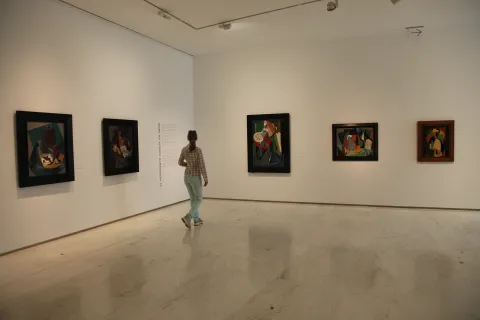
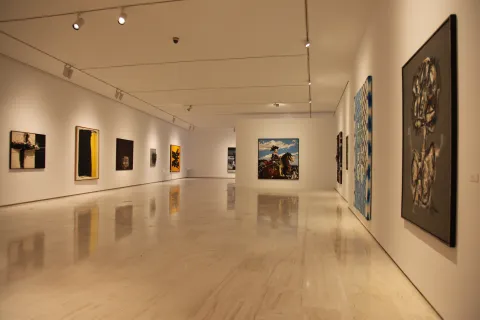
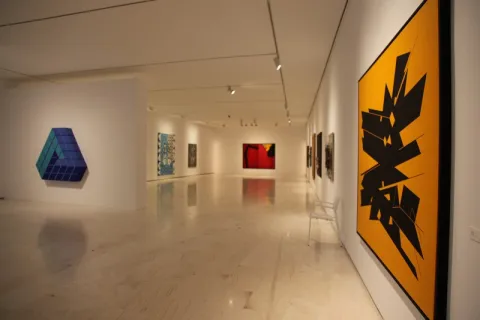
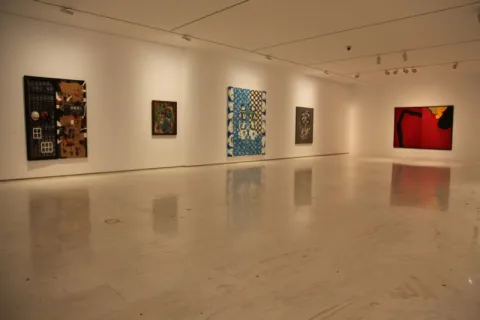
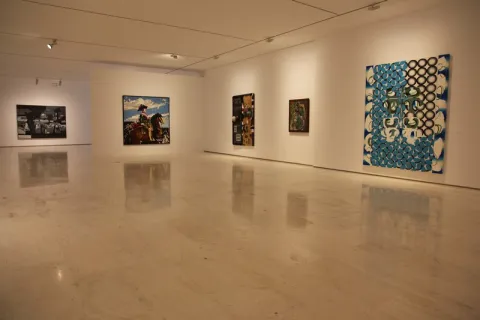
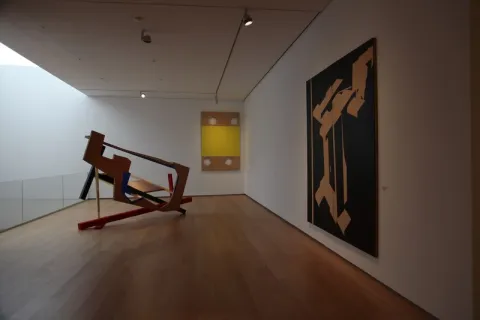
We present the new exhibition of the Mediterranean Foundation Collection with a vocation for permanence that occupies the second floor of the MACA, thus becoming part of the reading of the museum's permanent collections.

We have titled it With Time 2 in a double sense. With time is contemporary. That which is closely linked to the present time. What is happening. Like us, contemporaries of these works and sharing with them the space and time, sharing the aesthetic assumptions that gave them birth and their ultimate meanings. With time is also that which has passed since the Twentieth Century Art Collection that we show on the first floor of the museum and which Eusebio Sempere donated to us in 1977. Inevitably his collection became closed in the early 1980s. Since then and With time what has been happening is what we are showing through the Mediterranean Foundation Collection now revisited.

The Mediterranean Foundation Collection is composed of 213 works from which we have selected 18 works among painting, sculpture and photography of unquestionable plastic force. Works that have accompanied us in the different temporary exhibitions of the Collection that have been held in different spaces and cities. It is always a surprise to discover the artists represented in the Mediterranean Caja Collection, but it is even more surprising to discover which work of theirs has been acquired. It is always a fundamental work within their artistic trajectory, an example of the best of their aesthetic proposal and by which an artist is recognized as a singular artist. A work for its contemporaneity, roundly "classic". And this is evident in this exhibition. It is a contemporaneously classic exhibition.

EXPO-0018
Imagen
IMG_2978.jpg
Ignasi Aballí, Juan Uslé, Carlos León, Joan Hernández Pijuan, Jaume Plensa, Carmen Calvo, Hannah Collins, Esther Ferrer, Francesc Torres, Joseph Beauys, Jana Sterback, Pello Irazu, Miquel Mont, Manu Muniategiandikoetxea, Juan Ugalde y Daniel Verbis.
Rosa María Castells

Metamorphosis. Bingyi

Submitted by brandcode_deweloper on

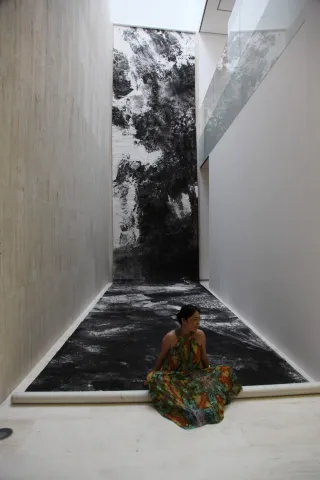
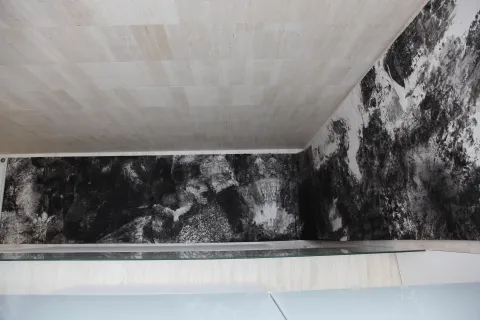
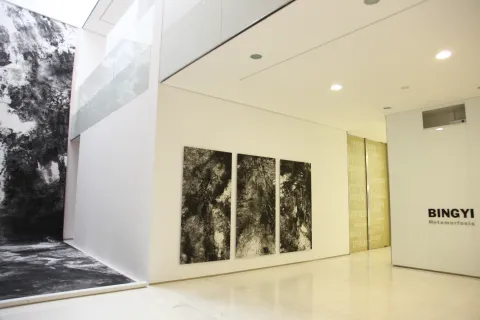
The exhibition composed of three panels and an endless roll of paper are part of the most recent creation by the Chinese artist where she evokes her travels through the sacred Chinese mountains; large-scale paper rolls and Chinese ink that unfold and extend like springs in the spaces where I intervened. In the "Metamorphosis" exhibition, Bingyi resorts to plays of light and shadow, soft and delicate stains, characteristic of haiku poetics, where the artist enjoys expressing herself, manifesting her amazement and rapture produced by the contemplation of nature.

EXPO-0017
Imagen
IMG_3652.jpg
/sites/default/files/inline-images/resources/exposiciones/EXPO-0017/hoja-de-sala-1_8.jpg
Bingy
Rosa María Castells

Overflow. Claudia Martínez

Submitted by brandcode_deweloper on

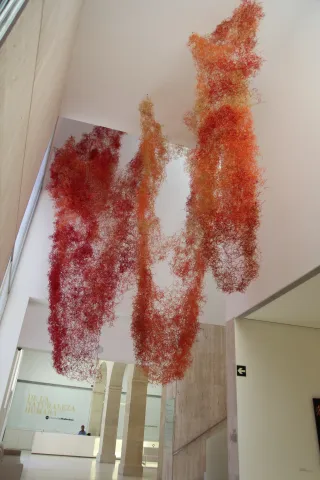
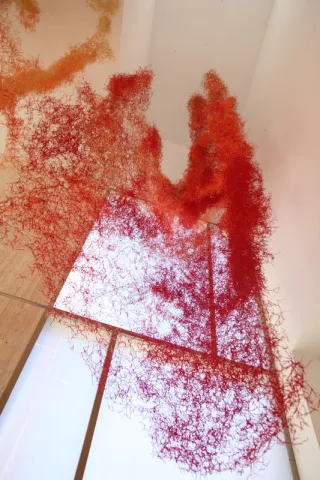
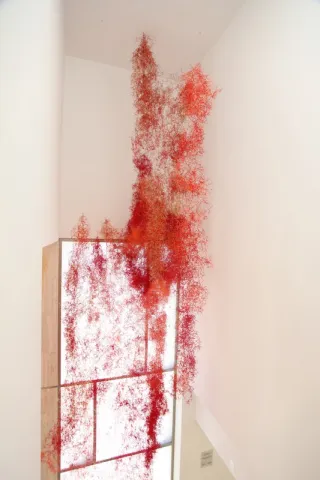
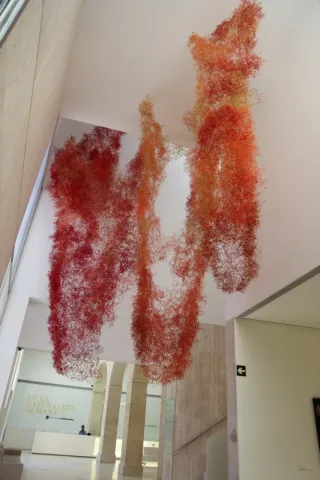
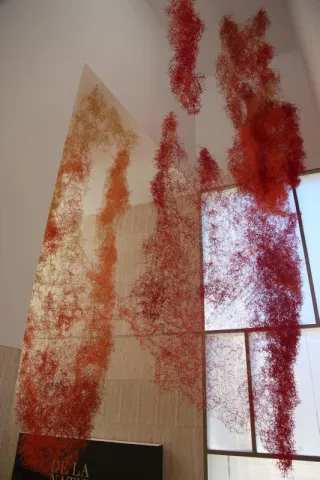
Overflow consists of a large-scale textile whose raw material is red, orange, and gold plastic thread with a wire core. The structure is formed by 100,000 meters of wire and 3 million knots, which stems from the concept of a fractal, a knot that repeats and connects the different parts of the mesh with great possibilities for permutations.

EXPO-0016
Imagen
IMG_2606.jpg
Claudia Martínez
Isabel Tejeda