On Colour in Art (COLORAMAS)

Submitted by maca on
EXTENDED UNTIL JANUARY 10, 202January 10, 2027.

The exhibition has been extended until January 10, 2027.

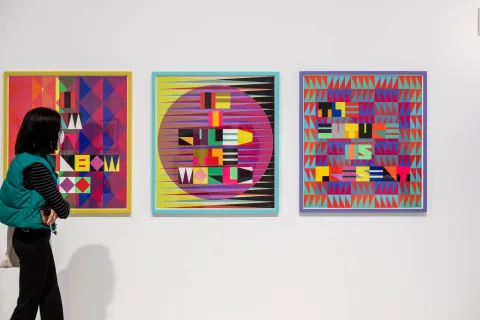
Colour does not exist, but the world is unimaginable without it. As a phenomenon —in every sense— it has existed in thought and in the arts from rock art to contemporary digital experiments. For many artists it has been at the centre of their practice, while for philosophers and scientists it has provided plenty of material for reflection and debate.

In art history, the importance of colour has often been discussed and challenged. It was the emergence of abstract art in the early 20th century that freed colour from the dictates of representation and the primacy of line. For the first time, colour could exist on its own in artwork, without being subjected to narrative models or other elements of graphic value: it ceased to be an adjective and it became a noun.

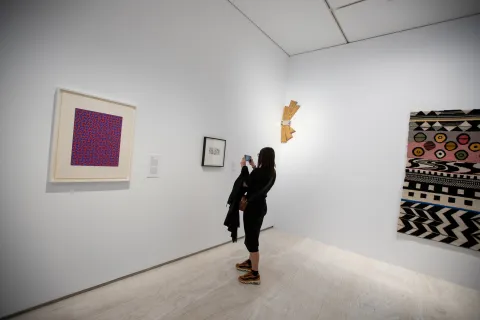
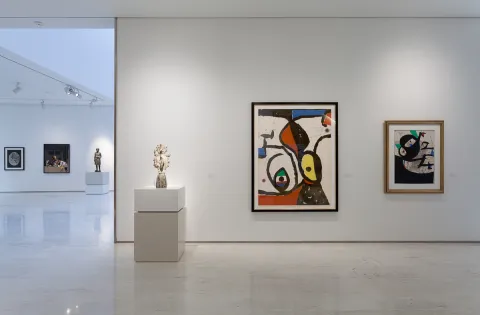
On Colour in Art (Coloramas) presents the work of a group of contemporary artists for whom colour is the essential principle of composition. All the artwork belongs to the collections of MACA. Museum of Contemporary Art of Alicante and they span 75 years, from the mid-1950s to 2025. The selection of artists, styles, techniques and materials conveys both the complexity of contemporary languages and the richness and variety of the museum’s collections.

Together with the artwork, the exhibition has two distinctive spaces. In the first, before going into the gallery, there is a small cabinet of curiosities where visitors can discover the origins of colour through minerals, dye plants, pigments, natural dyes and their uses in textiles. These are accompanied by samples of synthetic and industrial pigments, evidence of inventions —such as the patent for colour in tubes—, and documents that point to the ideological, political and social impregnation of colour.

Behind the white gallery and visually separated from it, is Coloramas. An expansive experience in a space that recalls early dioramas, camera obscuras and zoetropes, where an audiovisual tale tells the fascinating story of colour and its progression, first gradual and later disruptive, towards autonomy. Coloramas unfolds through scenes that explore colour as a physical phenomenon, a perceptual construction and a symbolic language.

This exhibition has its origins in Lo tienes que ver. La autonomía del color en el arte abstracto [You Have to See It. The Autonomy of Colour in Abstract Art], held at the Fundación Juan March in Madrid in 2025 and it is the result of the collaboration and support between institutions.


Imagen
foto
Rosa María Castells, María Zozaya y Aníbal Santaella

Soledad Sevilla [Waiting for Sempere]

Submitted by maca on

Soledad Sevilla [Waiting for Sempere] is a special exhibition in the artist's trajectory: a project that closes a vital and creative circle and that, at the same time, is essential for the MACA, a museum whose origins are intimately linked to the collection of Alicante artist Eusebio Sempere.
 

Sevilla and Sempere met in the 1960s. Between them arose a mutual admiration and "a deep and heartfelt friendship," while they coincided in some of the most relevant projects around geometric abstraction in the Spanish artistic context. A common interest in line, a rigorous practice of composition, and a drift toward the sensitive—toward a softer and more emotional geometry—connect the work of Sempere and Sevilla. This poetic affinity with the Alicante artist runs through Sevilla's entire career: from the beginnings to her most recent production, such as the series painted since the summer of 2022 conceived as inspiration and homage to her friend. Sevilla finds in light and line, like Sempere, a sensible emotion, a rigorous and deliberate stillness.
 

Starting from the pieces from the 1970s that we preserve in the museum's collections, the exhibition focuses its attention on the artist's most recent series. These are large-format paintings in which the vibration of the line, as filament or thread, generates surfaces that expand and continuously recompose themselves. These works envelop the viewer and invite them to experience the painting not only from sight, but also in a performative way, from the body that shares the space with it. Contemplation thus becomes a physical experience that unleashes intimate emotions. Sevilla manages to show the total space as a unity and, within it, deploy a wide range of registers and subtle variations. Geometry, far from being cold or distant, acquires here an intimate and introspective character.
 

A rigorous and disciplined artist, Sevilla works guided by intuition… As she herself states, her frameworks are "background for thought and art passes over it like a kind of reflection." Sempere himself describes it perfectly: "Why speak of painting if you are seeing it?"

EXPO-0084
Imagen
Sala
/sites/default/files/2026-03/Castellano_textos-sala-QR-1.pdf
Rosa María Castells
Obras pertenecientes a la Colección del MACA, a la Colección de Soledad Sevilla, del Museo Nacional Centro de Arte Reina Sofía, del Instituto Valenciano de Arte Moderno (IVAM) y de la Galería Maisterravalbuena.

Pablo Picasso. I say nothing more than what I do not say

Submitted by brandcode_deweloper on
Pablo Picasso and a Century of Artists

Pablo Picasso spans almost a century of art and alongside him, an essential series of artists radically transform the history of art while blurring the boundaries between figuration and abstraction. Many of them are represented here.

The 20th Century Art Collection holds among its holdings a large number of works on paper including drawings, engravings, lithographs and silkscreens that complete an extensive roster of essential artists, traversing the most suggestive territories of the artistic framework of the past century. 
And it is so because Eusebio Sempere and his companion Abel Martín, after experimenting in Paris with various printing techniques, introduced artistic silkscreen printing to Spain, creating beautiful prints of their own works and those of their artist friends. And they are deeply convinced that graphic work deserves the status of "original" and that it places contemporary art within reach of a majority of the public, democratizing it.

With that aesthetic and political conviction, Sempere always admired the figure of Pablo Picasso. He acquired Picasso's engraving belonging to the Vollard Suite, Fernando Zóbel gave him the Portrait of Rimbaud as a gift, and he bought The Burial of the Count of Orgaz, works that are shown here. In the same way that he participated in the Homage to Picasso that took place during the celebration of the artist's 90th birthday in November 1971, suffering as a result detention, imprisonment and a substantial economic fine. 

EXPO-0089
Imagen
042A9824bis.jpg
/sites/default/files/inline-images/resources/exposiciones/EXPO-0089/Folleto-Picasso-un-siglo-de-artistas-AF-para-imprenta-3.pdf
Rosa Castells

Contemporary Art of the Valencian Generalitat

Submitted by brandcode_deweloper on
Amparo Tormo, Teresa Lanceta and Paloma Navares

Since 2017, the Department of Education, Culture and Sport has maintained a line of acquisition of artworks with the dual purpose of stimulating the contemporary art market, while also gathering a collection of works representative of the current artistic scene in our Community. Different generations and sensibilities that approach the artistic creation process, offering new perspectives on our closest world.

A selection of three pieces by three artists: Paloma Navares, Teresa Lanceta and Amparo Tormo can be enjoyed at the MACA.

EXPO-0090
Imagen
P1058486.jpg
/sites/default/files/inline-images/resources/exposiciones/EXPO-0090/CATALOGO-PRIMERS-MOMENTS.pdf
Paloma Navares
Rosa Castells

The Shortest Night

Submitted by brandcode_deweloper on
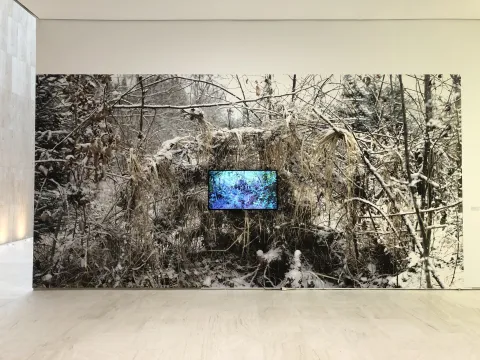
Fernando Sinaga, José Maldonado, Judith Egger, Máximo González, Pipo Hernández and Tamara Arroyo.

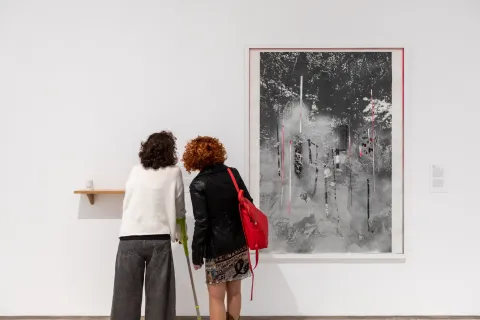
The Shortest Night is a collective exhibition that emerges as a collaborative proposal between both galleries and the museum, opening a dialogue around the idea of transformation in creative, artistic, and vital processes.

As an effort to promote new forms of art production and exhibition, the show is carried out in a transversal and concomitant manner across the three venues of the galleries in Madrid and Alicante and the MACA, with works displayed organically among them, taking conceptual and aesthetic criteria above the representation of the galleries as a real exercise in institutional synergy.

The Shortest Night delves into transformation as a process of resignification that promotes regeneration, transmutation, change, and renewal, considering the difficult times we are living in and making reference to the traditions of Saint John, a time in which a change of season takes place whose tradition consists of making way for the new, renewed, and transformed.

EXPO-0091
Imagen
IMG_3739.jpeg
Fernando Sinaga, José Maldonado, Judith Egger, Máximo González, Pipo Hernández y Tamara Arroyo.
Rosa Castells

Overture. Beyond the Maps

Submitted by brandcode_deweloper on
Michael Jenkins and Javier Romero Collection from MACA

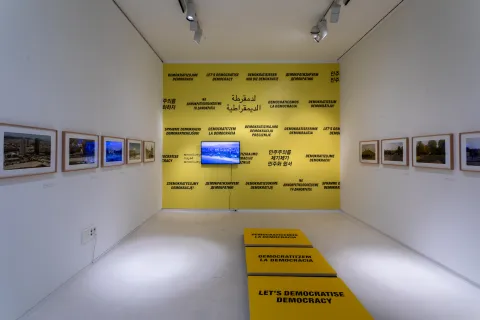
Opening. Beyond the Maps is the title of the first exhibition of the Michael Jenkins and Javier Romero Collection at MACA. It includes forty-nine artists from different generations and nationalities from among the one hundred sixty-two that make up the collection, with works spanning from the late sixties to the present day, seeking a balance between historical figures or artists with long careers and younger artists. 

Opening because it initiates and serves as an introduction to a more extensive collection that seeks to eliminate not only geographical hierarchies, but also hierarchies of disciplines and artistic media, generational boundaries, gender or identity, individual or group work, or hierarchies that could be applied to the diversity of formal or conceptual approaches in art to offer a vision that goes beyond maps, beyond any kind of preestablished and hermetic artistic boundary. Opening our perspective.

The proposed selection reflects the variety of themes and narratives that artists have been exploring in the social and political context, in order to stimulate critical thinking and offer a clearer and more faithful image of reality. We also wanted to highlight the high presence of women artists in the collection and they constitute half of the artists included in this presentation. We have also selected several artists of color from the notable group whose works are represented in the collection. Finally, it was important to highlight the presence of artists from Alicante, for which we have included the work of ten of them in order to create a reading that, aspiring to the global, understands the local, the closest, as fundamental.

Thus, trying to eliminate chronological and territorial boundaries, we propose that in this first installation artists from different generations and geographical contexts coexist and that cross-dialogues be constructed between the selected works. Let this serve as an introduction.
 

EXPO-0082
Imagen
042A0286.jpg
/sites/default/files/inline-images/resources/exposiciones/EXPO-0082/Folleto-Cast_Val_5.pdf
Elena Aguilera, Richard Artschwager, Aurelio Ayela, Joseph Beuys, Nayland Blake, Louise Bourgeois, Mark Bradford, Trisha Brown, Fernando Bryce, Pepe Calvo, Olga Diego, Nicole Eisenman, Tony Feher, Inma Femenía, Katharina Fritsch, Nuria Fuster, Anna Bella Geiger, General Idea, Jeff
Gibson, Felix González-Torres, David Hammons, Mona Hatoum, Arturo Herrera, Sheila Hicks, Mike Kelley, Ellsworth Kelly, Corita Kent, Teresa Lanceta, Sherrie Levine, Glenn Ligon, Angel Masip, Josiah McElheny, Zanele Muholi, Vik Muniz, Claes Oldenburg, Ana Teresa Ortega, Cindy Sherman, Erin Shirreff, Amy Sillman, Hiroshi Sugimoto, Richard Tuttle, Danh Vo, Kara Walker, Andy Warhol, Ruth Wolf-Rehfeldt, Jesus Zuazo.
Rosa María Castells

Eusebio Sempere

Submitted by brandcode_deweloper on

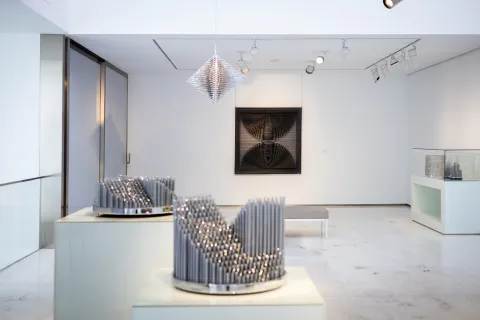
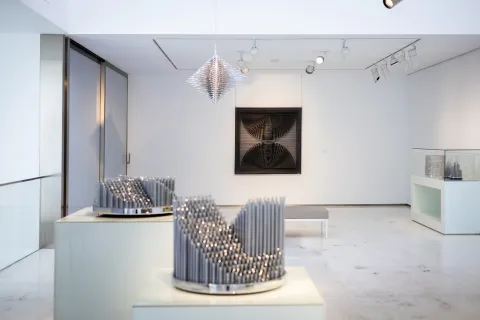
He is the most internationally renowned artist from Alicante and one of the most genuine Spanish representatives of geometric abstraction and optical and kinetic trends. His work is the fruit of continuous and rigorous work on geometry, movement and optical illusion, in which he also develops, from composition and form, a lyrical poetics of singular beauty.

The Eusebio Sempere Municipal Collection is made up of works by the Alicante artist that the Alicante City Council has acquired from 1978 to the present day. It consists of 575 pieces including drawings, paintings, sculptures and graphic works. Chronologically, this set of works spans a very extensive period of Sempere's production: from the early 1940s (drawings and oils) to the first modern works the artist created in Paris in the 1950s (a wide selection of watercolors and gouaches), continuing with the paintings on panel from the 1960s so characteristic of his production and sculptures in iron and chrome-plated steel, typical of his work in the 1970s. Likewise, it includes an important selection of silkscreens and lithographs that showcases the most singular aspects of his graphic work. This is a collection that traces the creative evolution of one of the most interesting personalities in the Spanish art scene of the second half of the twentieth century. It is—moreover—an authentic tribute to Sempere, protagonist of one of the most generous acts toward the city of Alicante: the donation of his art collection… a lifetime.

EXPO-0081
Imagen
KG2A8094-1.jpg
Rosa María Castells

20th Century Art Collection

Submitted by brandcode_deweloper on
From the essentials to the indispensables

From the Essential to the Indispensable

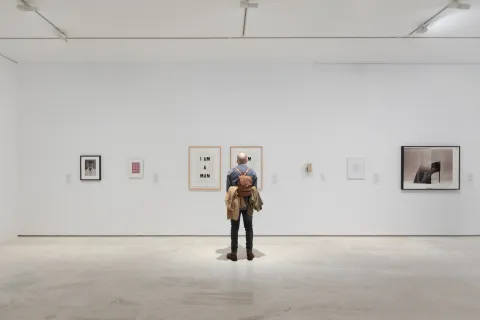
The Twentieth Century Art Collection donated by Eusebio Sempere to the city of Alicante is the cornerstone of this new Museum of Contemporary Art in Alicante. It is composed of 177 pieces including sculptures, paintings, drawings and graphic works, dated from the twenties to the early eighties and is the result of a most rigorous work of selection and acquisition of works by the greatest artists of modernity and the avant-gardes of the past century.

The Collection treasures authentic masterpieces that represent the main names and movements of Spanish art, where it reaches its highest peaks. With a decided international vocation, its creator, Eusebio Sempere, makes clear his great sensitivity, vision of the future and above all, his will to disseminate the aesthetic values of twentieth-century art.

Some of the most important creators of our century are represented here: Picasso, Braque, Julio González, Juan Gris, Gargallo, Delaunay, Arp, Cocteau, Chagall, Giacometti, Miró, Dalí, Max Ernst, Calder, Bacon, Matta, Fautrier, Clavé, Tàpies, Chillida, Millares, Saura, Vasarely, Agam, Soto, Rosenquist, Oldenburg, Rauschenberg, Adami, Dine… among others. But it is in the realm of Spanish twentieth-century art where we find the best works of the Collection and a more extensive range of trends, movements and significant groups of avant-garde art in our country with works by Alberto Sánchez, Ferrant, Palazuelo, Guerrero, Viola, Feito, Rivera, Canogar, Juana Francés, Pablo Serrano, Alfaro, Guinovart, Ràfols Casamada, Hernández Pijuán, Farreras, Manrique, Mompó, Torner, Rueda, Zóbel, Lucio Muñoz, Equipo Crónica, Julio López Hernández or Genovés, among others…

An impressive display of paintings, sculptures, mixed media works, drawings, engravings, lithographs and silkscreens completes the extensive list of indispensable artists, traversing the most suggestive territories of the artistic framework of the past century.

EXPO-0080
Imagen
IMG_2311.jpg
Rosa María Castells

The Invited Piece. Arcadio Blasco: Object-Idea

Submitted by brandcode_deweloper on

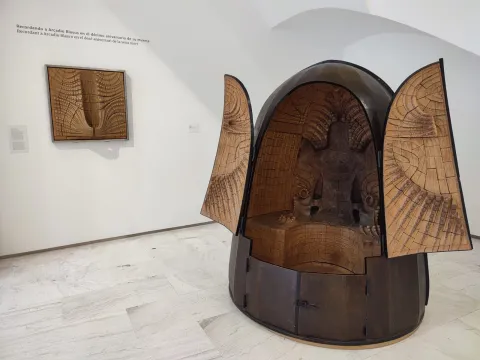
The MACA now has the piece "Objeto-idea" by Arcadio Blasco on the occasion of the tenth anniversary of his death. The work has been deposited for a period of five years by José Piqueras, and has been on display since today on the ground floor of the museum. The artist

Arcadi Blasco Pastor (Mutxamel, Alicante, 1928 – Majadahonda, Madrid, 2013) was a painter who in the second half of the 1950s found in ceramics the ideal material for plastic expression. His artistic training as a painter took place at the School of Fine Arts in Madrid, where he arrived at the age of 19, completing his teaching course at the School of Fine Arts of San Carlos in Valencia in 1953. That same year he moved to Italy, where he lived for two years at the Academy of Spain in Rome, where he had his first contact with ceramics through the work of Nino Caruso and Carlo Zauli.

Upon returning to Spain, he carried out his first ceramic experiments and became interested in artisanal ceramics, which led him to work with the potter from Cuenca, Pedro Mercedes—with whom he exchanged knowledge—and in other popular ceramic workshops in Agost and Triana (Cerámica Montalbán). In 1955 he set up his first workshop in a space—ceded by architect Luis Feduchi—the half-built building of the Museum of America located in the University City of Madrid, which he shared with José Luis Sánchez, Jacqueline Canivet and Carmen Perujo; there he would create, among other works, many stained glass windows, mosaics and ceramic murals intended, in large part, to decorate the churches that were built by commission of the Institute for the Colonization of the Towns of Spain, collaborating with architects José Luis Fernández del Amo, Ignacio Gárate, Luis Cubillo, García Benito, Luis Feduchi, Fernández Alba and Fisac, among others. The immense space of this place of work for creativity was also occasionally used by painters such as José Vento, Hernández Mompó, Rafael Canogar, Antonio Saura, etc., who needed to create large-format works and did not have sufficient space in their studios. This provisional workshop became a meeting place for artists of the young Madrid avant-garde.

Precisely, one of the most notable characteristics of Arcadio Blasco's trajectory as a ceramicist is his direct participation, between the years 1945 and 1974, in the new development of contemporary art, as he was—as Carmen González has rightly pointed out—"the only ceramic artist who, through a series of 'coincidences'"—as he himself defines them—participates in the field of plastic arts, and who has held a large number of national and international exhibitions in contemporary art forums, always bringing ceramic work.

After an initial direct approach to ceramic work, which consisted of using the surface of vessels as a support for his pictorial vocabulary—creating works with a certain decorative charge—Arcadio Blasco felt strongly attracted to the qualities and expressiveness of this material, and as a consequence his Ceramic Paintings (1956-64) were born.

In all his subsequent work cycles: Idea Objects (1969), Ornamental Proposals (1969-74), Architectures and Walls to Defend Oneself from Fear (1970-86), Archaeological Ruins (1984-86), Mill Wheels to Commune (1985), Tributes (1992-95), clays of different tones, slips, glazes—less frequent and very nuanced—and applications of coloring oxides in earthy tones will be—often subjected to reduction firing—the protagonist materials of his works.

In that whirlwind of searches that the 1950s became for the most nonconformist Spanish artists, Arcadio Blasco investigated the possibilities of ceramic material and found in fired clay the ideal medium with which to realize in volume his latest pictorial investigations, which would lead—in ceramics—at the end of the 1960s to reliefs and sculptures of social commitment and political criticism.

With his return in 1985 to his birthplace (Mutxamel) and the installation of his workshop in a country house in the Bonalba area, Alicante, an artist in full maturity returned who made an effort to activate Alicante's culture through various initiatives, some related to ceramics and its teaching.

Some of these "Idea-Objects" from the late sixties were shown in the Arcadio Blasco exhibition at the Spanish Pavilion of the XXXV Venice Biennale in June 1970, and were the prelude to his "Ornamental Proposals for Dialogue" and "Proposals for Torture," series to which fundamental works of his artistic production from the early seventies belong, such as "Enclosure for a Legal Murder" from the MACA collection.

Ceramics is the protagonist and the reliefs begin to wrap around themselves, to want to hide, acquiring a more sculptural and even architectural aspect with the insertion of usable openings. These works are crafted with artisanal meticulousness through a set of very personal resources: touches and impressions like cuneiform and repetitive writing; rows of balls or pearls of clay added and of different sizes; necklace beads or radiations as if they were pieces of goldwork from ancient cultures, refined and barbaric at once, with all kinds of roughness and reliefs where the matter still seems to boil.

EXPO-0079
Imagen
WhatsApp-Image-2023-06-14-at-12.18.58.jpeg
Rosa María Castells

The Invited Piece. Vulnerability(ies). Henri Cartier Bresson
Submitted by brandcode_deweloper on
Collection For the Love of Art, Bombas Gens, Valencia

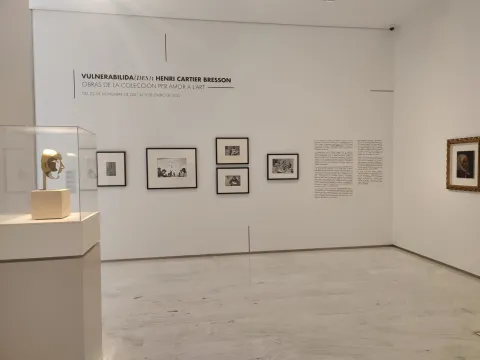
The five photographs by Henri Cartier Bresson shown here belong to the Per Amor a l'Art Collection – Per Amor a l'Art Foundation of Valencia. These works invited to the MACA are part of the exhibition project Vulnerability(ies), carried out in collaboration with Bombas Gens Centre d'Art and the Museum of the University of Alicante.

Vulnerability is a complex reality that has acquired notable prominence in recent times as a result of phenomena such as social inequality, the effects of climate change, gender-based violence, migratory movements, and the recent Covid pandemic. Theoretical reflection on human vulnerability is not recent; however, the urgency of responses to the moment we are living in, so compromised in many aspects, has validated its relevance.
We immediately associate the concept of vulnerability with that of fragility. To be vulnerable is to be a fragile subject. We often transfer this condition onto others based on their gender, their body, or their social position, but we avoid the thought that this state is constitutive of our own experience and, therefore, inherent to human nature. Feminist thinker Judith Butler has proposed rethinking vulnerability as a means to illuminate other models of living together, based on the recognition of interdependence between subjects and the need for care. Therefore, vulnerability is not a reason for inaction or submission but an opportunity for social emancipation and political resistance.
With this spirit, the exhibition Vulnerability(ies) emerges: as an approach to experiences of fragility from artistic practices that encourages us to understand ourselves as vulnerable beings – both in social and individual aspects – but capable of acting collectively to build new forms of relationship between us and between us and nature.

Henri Cartier Bresson (1908-2004) is one of the fundamental names in the history of photography of the last century. He was a pioneer of modern photojournalism, promoter of the Magnum Photos agency, and creator of the concept of the decisive moment: the sensation of making the eye, the head, and the heart coincide in a concentrated gesture that allows capturing reality by surprise.
Born in France, he wanted to dedicate himself to painting and began to frequent artists, especially surrealists, who decisively marked his almost pictorial gaze that he would express in images far from the anecdotal and as close as possible to the intimate truth of people. He always used black and white and was an enemy of color and the use of flash.
A man of strong political convictions, anticolonialist and republican, his commitment placed him in the most iconic revolutionary scenarios, making him an inveterate traveler. In the 1930s he traveled through several Spanish cities, including Alicante, where he captured with his lucid camera these famous images.

Works:

Henri Cartier Bresson
Alicante, Spain, 1933
Silver gelatin print
Per Amor a l'Art Collection, Valencia.

Henri Cartier Bresson
Alicante, Spain, 1934
Silver gelatin print
Per Amor a l'Art Collection, Valencia.

Henri Cartier Bresson
Madrid, Spain, 1933
Silver gelatin print
Per Amor a l'Art Collection, Valencia.

Henri Cartier Bresson
Madrid, Spain, 1933
Silver gelatin print
Per Amor a l'Art Collection, Valencia.

Henri Cartier Bresson
Flooding, Spain, 1933
Silver gelatin print
Per Amor a l'Art Collection, Valencia.

EXPO-0077
Imagen
WhatsApp-Image-2021-11-25-at-11.00.33.jpeg
Henri Cartier Bresson
Rosa María Castells
Obras de la Colección Per Amor a l’Art