MACA Parking Club, 2019

Submitted by brandcode_deweloper on

The second edition of MACA Parking Club was a step forward in consolidating the museum as a space for encounter and creation. Also selected in the CERCLES call from IVAJ and the Consorci de Museus de la Comunitat Valenciana, this edition deepened the prominence of adolescents, inviting them to inhabit the museum with freedom and to experiment with diverse languages such as graphic design, collage, photography, installation, and performance.

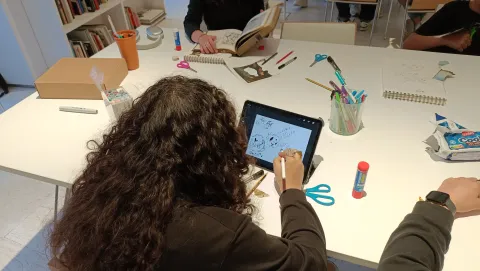
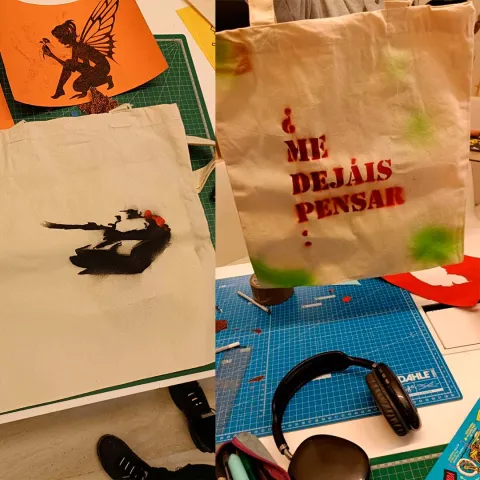
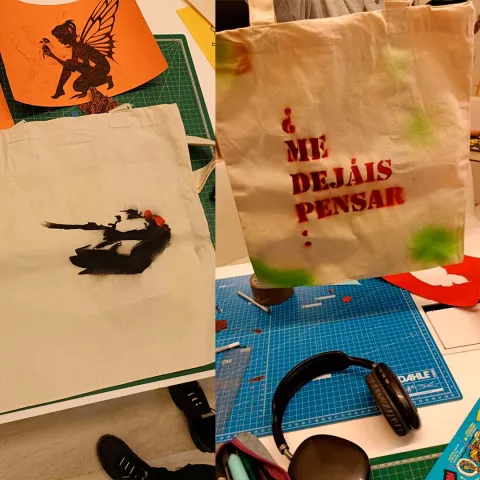
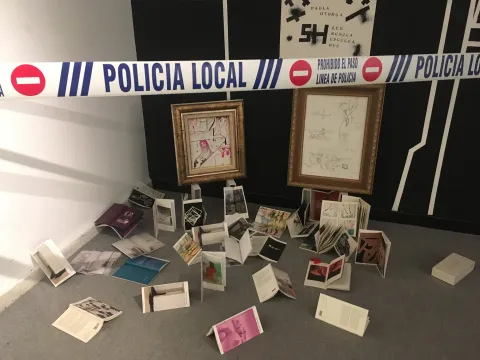
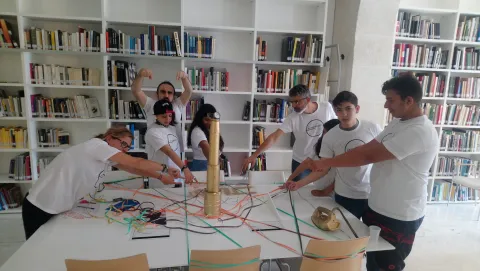
The images from this edition show the intensity of the process: tables full of papers, clippings, and colors; walls that transformed into collective canvases; collages that mixed irony, identity, and social critique; graphic installations that questioned memory, time, and authority; and groups of young people working together, laughing, trying, making mistakes, and creating. All of this shaped a living laboratory where the everyday became extraordinary and where each proposal revealed new ways of thinking about art and the museum.

The participants developed experimental self-portraits, reinterpreted cultural icons, played with scenic montage, and gave new meaning to the museum's spaces through collective projects. The result was not just a collection of works, but a shared process that reaffirmed the idea that MACA can be a youth cultural club, a refuge of free creativity, and a space where imagination finds legitimate channels of expression.

This second edition demonstrated that, when space and trust are given to adolescents, a transformative creative energy emerges capable of redefining the relationship between cultural institutions and new generations.
EDUC-0130
Imagen
IMG_9783.jpg
School period
Gratuito previa reserva

MACA Parking Club, 2018

Submitted by brandcode_deweloper on

The first edition of MACA Parking Club, selected in the CERCLES call by IVAJ and the Consortium of Museums of the Valencian Community, was a pilot project that opened the museum doors to adolescents from a fresh and disruptive perspective. Far from the conventional visit, the proposal transformed the spaces of MACA—including its parking lot—into a creative laboratory where the everyday became art and where young people could reclaim the museum as a place of their own.

The images from this edition reflect a process full of energy and freedom: graphic interventions that overflowed the paper to occupy walls and frames; collective collages and self-portraits constructed with irony and humor; installations that mixed everyday objects with cultural symbols; improvised performances in the museum halls, where participants rewrote scenes based on works by artists such as Joan Miró; and actions in public space that brought the experience outside the halls.

Parking Club established itself from its first edition as a horizontal meeting space, where each participant found an active and creative role. The methodology, based on experimentation and collaborative work, allowed adolescents to express themselves through multiple languages—from audiovisual to graphic, from installation to performance—and to explore questions of identity, memory, power and image in dialogue with contemporary art.

The result was much more than a series of artistic productions: a space of trust and belonging was generated, a cultural club in which young people could experiment, make mistakes, play and create without hierarchies, reaffirming that the museum can be a living, open place in constant transformation.

EDUC-0129
Imagen
DSC_1568.jpg
School period
Gratuito previa reserva

Play-Ink, 2025

Submitted by brandcode_deweloper on

The third edition of 2025, carried out in collaboration with the "la Caixa" Foundation, marked an important milestone: the participants were responsible for designing the graphic identity of the La Liada Gráfica festival, held at the Las Cigarreras Cultural Center on June 6 and 7. There, in addition to presenting their own works, they shared space with independent artists and publishers, actively integrating themselves into the city's cultural ecosystem. This leap from the workshop to the public space represented a symbolic and real recognition: their graphic voices were heard, exhibited, and valued in a professional and community framework.

EDUC-0128
Imagen
MACA-JOVENES.jpg
School period
Gratuito previa reserva

Play-Ink, 2024

Submitted by brandcode_deweloper on

After the mandatory pause caused by the pandemic, the project consolidated itself in 2024 and 2025 as an ongoing process with strong territorial roots. In these editions, young people from the Gastón Castelló Community Social Center participated, coming from the neighborhoods of Virgen del Remedio and Juan XXIII, two areas marked by contexts of vulnerability, but also by intense community and cultural life.

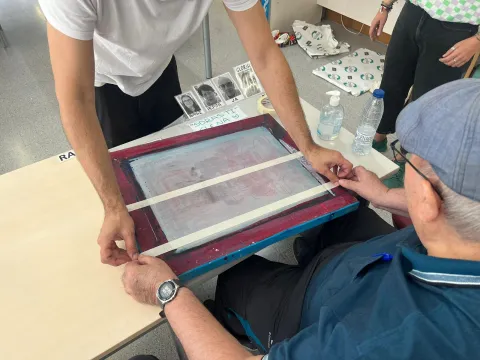
During ten sessions, the participants went through a creative itinerary that encompassed all phases of a graphic design project: from the conceptualization of ideas to final production and public presentation. In this process they worked with diverse techniques—screen printing, illustration, collage, experimental typography—, always from a participatory and collaborative methodology that placed the voice of young people at the center.

EDUC-0127
Imagen
4.jpg
School period
Gratuito previa reserva

Play-Ink

Submitted by brandcode_deweloper on

The first edition of MACA Play Ink was selected in the CERCLES cultural mediation call, promoted by the Consortium of Museums of the Valencian Community (CMCV). This recognition made it possible to shape a proposal that, from the outset, sought to position young people as protagonists of a creative process linked to contemporary issues and close to their lives.

In this first phase, the project explored the intersection between graphic art, music and sustainability, betting on an interdisciplinary approach that connected directly with the interests and languages of the participants. Through this dialogue between disciplines, young people were invited to reflect on urgent issues such as climate change, consumption habits and the need to imagine new forms of relationship with the planet. Graphics and sound became expressive tools for thinking about the common good, denouncing injustices and giving shape to alternative visions of the future.

The creative process was structured around technical workshops in screen printing, experimental graphics and typography, combined with active listening sessions and collective dynamics of debate and reflection. Music and rhythm served as a motor to generate images charged with energy, while manual work with inks, papers and screen printing screens provided a space for concentration, patience and discovery.

Beyond the visual result, this first edition became a space for encounter and mutual discovery. The participants not only acquired new artistic skills, but also learned to work as a team, to share ideas and to recognize the strength of their voices when expressed collectively. In many cases, it was also the first time they approached a museum as their own space, not as a distant place, but as a laboratory of experiences.

EDUC-0104
Imagen
4-1.jpg
Tuesday in the afternoon.

Route. Breathing MACA

Submitted by brandcode_deweloper on

«Breathing MACA» goes beyond a conventional guided tour.

These are visits in which the content and forms of communication are adapted, with the aim of transforming the museum into a space oriented toward promoting social inclusion, driving education and art as mediating agents to strengthen the quality of life for all people.

In all visits we propose participating in art and culture and coming into contact with it, having a voice in the first person and generating meaningful experiences that stimulate dialogue, reflection, imagination, critical thinking, and the possibility of sharing and participating in the project making use of all the senses. An always exciting project.

Breathing MACA is aimed at groups with different abilities, functional diversity or at risk of social exclusion.

EDUC-0103
Imagen
todosmaca.jpg

Pulling the Thread

Submitted by brandcode_deweloper on

It was born as a selected project in the public call 'Lugar Común', from the Consorci de Museus de la Comunitat Valenciana, within its 'Culture on Equal Terms' program. Created and carried out by David Gil and Ester García from 'Daguten. Escuela Gráfica de Barrio', it has been developing since 2019.

Tirando del Hilo has always aimed to be an opportunity to awaken creativity in people with intellectual disabilities from the Terramar Occupational Center of APSA. The sessions aim to create a meeting space in the museum where participants have learned to enjoy art and have experimented with the various expressive possibilities offered by graphic arts.

And so the participants from the Terramar Occupational Center of APSA in Alicante, the "Equipo Seri", were able to design and create, projecting their ideas in each proposed project, and their results have been reflected in various designs such as the t-shirt for the Plataforma Festival and an exhibition in the D Space of MACA during the months of December 2019 and January 2020.

EDUC-0102
Imagen
IMG-20231103-WA0005.jpg

MACA/San Rafael Objective

Submitted by brandcode_deweloper on

MACA/San Rafael Objective was born in 2019 from MACA's interest in promoting and providing tools for the dissemination of art and artistic production, with the aim of contributing to the transformation of society through culture from collective work. The program was designed for users of the San Rafael Center, San Francisco de Borja Foundation. Due to its multidisciplinary nature, it is expressed through workshops that cover disciplines such as drawing, painting, sculpture, photography..., generating social value in people with intellectual disabilities, and emphasizing their creative work rather than the disability.

In 2020, due to the health situation, it was postponed.

EDUC-0101
Imagen
IMG_4413.jpg

Outskirts. Art and Mental Health

Submitted by brandcode_deweloper on

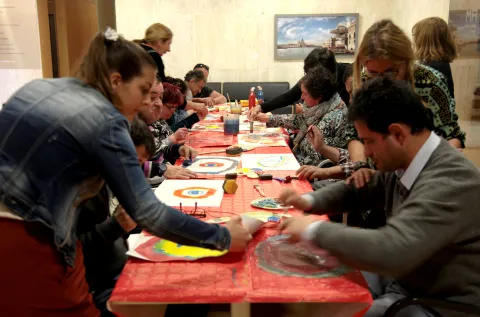
Extrarradio. Art and Mental Health is an educational project for museums, designed and directed for people with mental illness, with the objective of generating meaningful experiences that lead to the development of skills not only artistic, but also social, emotional and communicative. It has been created and developed by Ester García Guixot, a graduate in Fine Arts and museum educator, allowing to describe and put into practice an intervention methodology, through which it has been possible to develop the research The Museum. Art and creative processes as a means and tools for dialogue for people with mental illness in the university Master's program Education and Museums. Heritage, identity and cultural mediation taught by the University of Murcia during the years 2015 and 2016.

The participants of the project have been 25 patients from four Rehabilitation Units of the Dr. Esquerdo Socio-Assistance Center dependent on the Mental Health Area of the Provincial Council of Alicante

EDUC-0098
Imagen
Sin-titulo-3.jpg

Refry

Submitted by brandcode_deweloper on

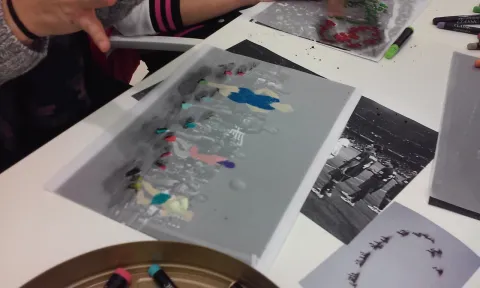
An educational project proposed in three sessions at the centers, conducted by an educator and three artistic-creative workshops. Sessions focused on reflecting on the surrounding reality, art and the Museum. Starting from observation exercises and creative processes, works and documents are generated that will undoubtedly lead participants to broaden their critical vision regarding their world and art

Four groups of 20 students from the Els Reiets juvenile rehabilitation center in Alicante and the Secondary Education Section of IES Figueras Pacheco participated in this experience. Young people aged between 14 and 21 years old.

On this occasion, it is the Museum that travels to the center in order to bring works of art to those who cannot enjoy them in person. Contemporary images connect in an exemplary way with the world of young people and adolescents, being capable of forming their own iconography that establishes connections between their personal situation and artistic creation. Easier to verbalize than with words.

This project arises from a Session / Zero that took place within the 3x3 program at the Els Reiets juvenile rehabilitation center in Alicante (Secondary Education Section of IES Figueras Pacheco).

EDUC-0096
Imagen
3.jpg
Monday to Friday