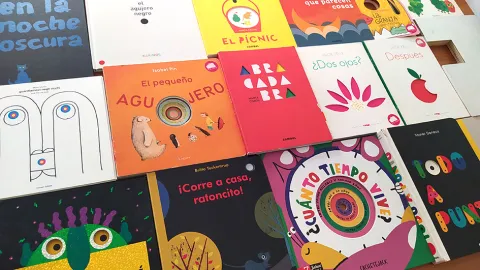
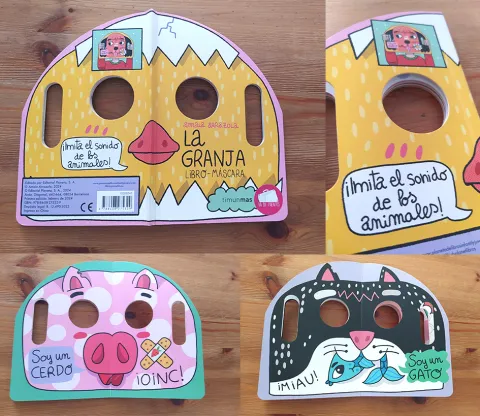
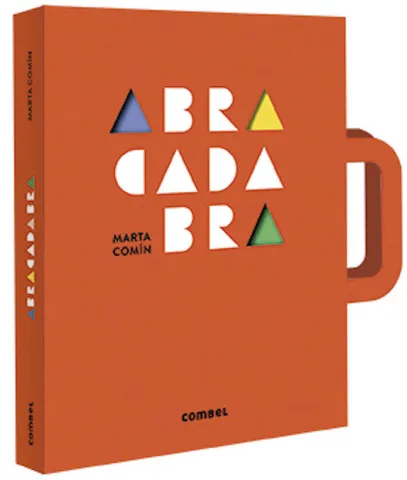
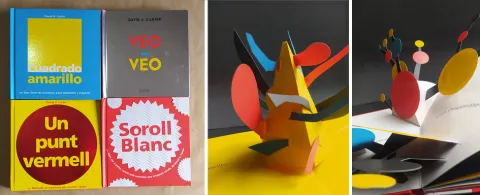
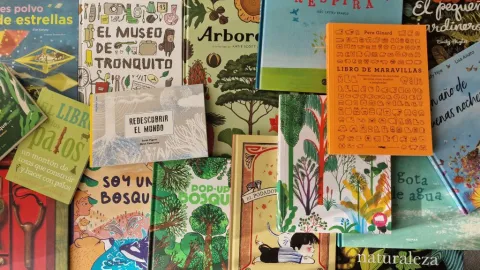
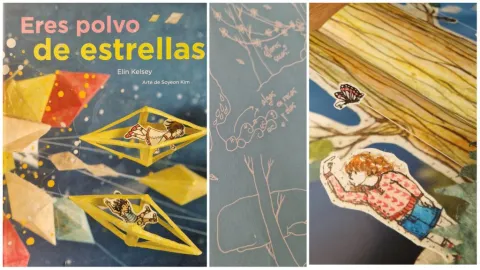
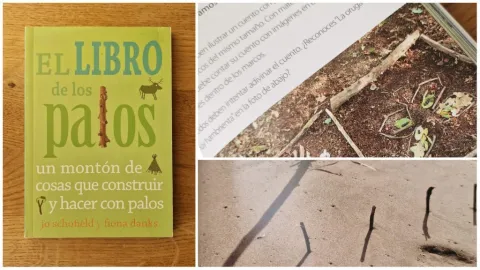
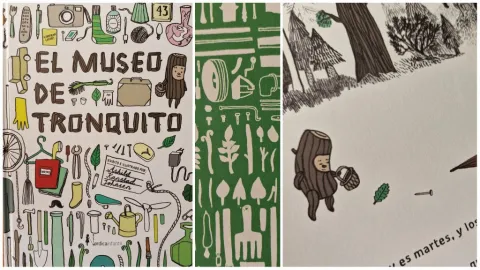
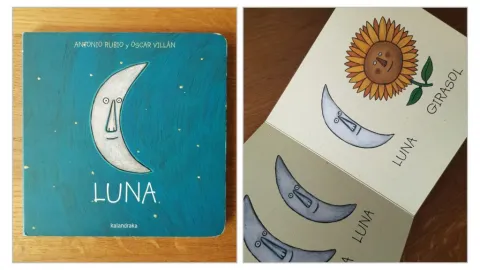
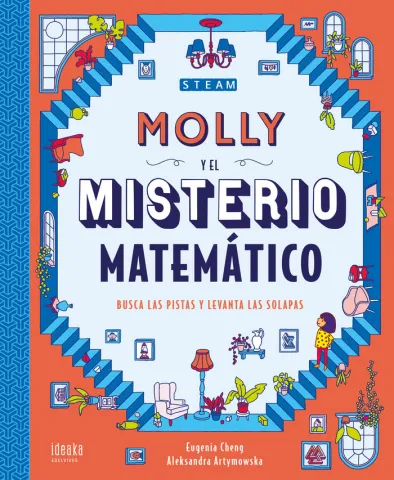
Today we bring you a selection of varied books but with a common theme, all of them have holes between their pages. The authors of these books have invented diverse and creative ways to use the hole element in their books, thus awakening in their readers a playful perspective, surprise and wonder.
They are perfect books to enhance our imagination and our love for reading letters and images.
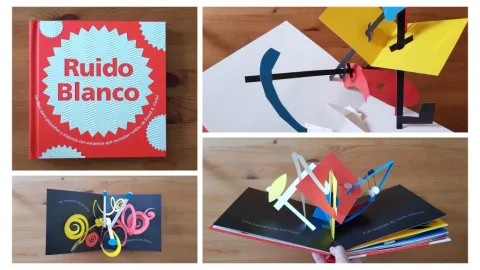
In this laboratory of letters and images we delve into the pop-up universe.
A technique that we find in some books in which three-dimensional elements made of paper unfold when opening their pages, generating incredible sculptures that fold back into 2 dimensions when closing the book. Reading a pop-up book is a unique sensory experience!
Pop-up books span a wide range of genres and topics, from children's stories to art and design books. Here we show you some reference titles and authors of this technique.
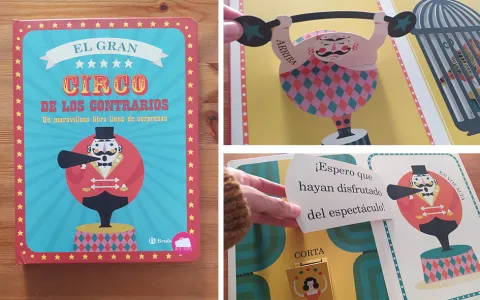
Books with windows and flaps are very attractive for children, as they offer an interactive and tactile experience while exploring their pages. By activating their paper mechanisms, we will discover hidden images or texts and reveal image games that transform. For this laboratory, we have gathered some books that invite us to play with the book object by activating its pages and inviting us to the game of creativity. We highlight here some that have captivated us:
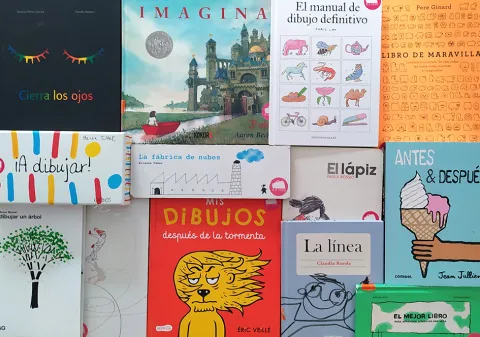
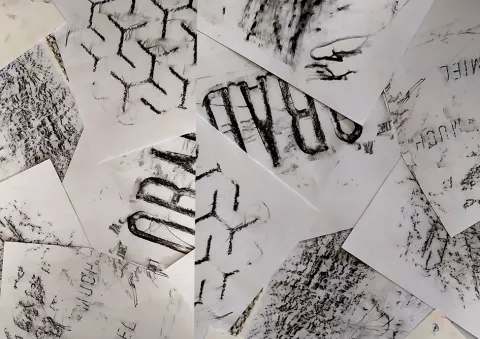
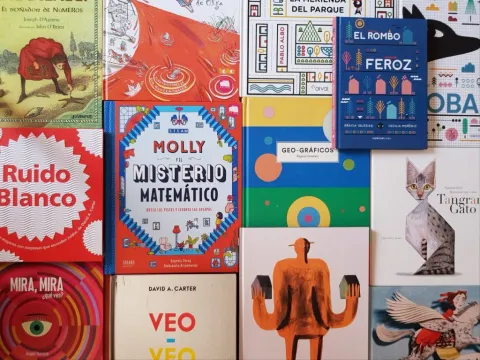
Drawing books is what we're going to explore in this at-home laboratory, in which we'll choose one of them to make a super cool creative proposal: a collection of textures!
We've gathered some books that invite us to explore drawing in different dimensions.
Drawing is the foundation of visual thinking and manifests itself in a thousand different ways. It can represent the visible and the invisible, it helps us think and explain our ideas to others, and it can be expressed through multiple tools and supports.
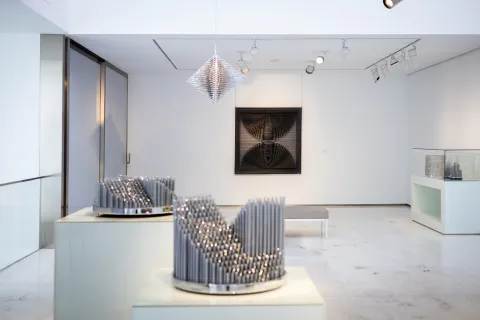
Kinetic Art and Sempere will be the protagonists of this new laboratory of children's stories to make at home or in the classroom. Let's go! In contemporary art we find a movement where the work includes research on geometry and its elements, such as form, color, light... Also including another very important variable: movement. This movement is called kinetic art.
Eusebio Sempere is an artist from Alicante who stood out greatly in kinetic art, inspired by abstract and geometric avant-gardes.
Sempere sought to create works that were capable of generating dynamic and changing visual sensations, depending on the viewer's point of view and the incidence of light.
To do this, he used various media and techniques, such as relief, mobile, sculpture, painting, engraving and computer art.
At the MACA several of his works are represented:
Interacting with sculptural books is a unique and fascinating experience.
May 18th is International Museum Day and we are going to celebrate it by making visible the connection between art and nature.
Museums do essential work in the preservation, exhibition and research of artistic-cultural heritage and historical-scientific heritage.
Increasingly, they become a place of encounter, creation and dissemination of knowledge.
For example, the MACA can be visited not only to see exhibited works, but also to experience artistic experiences.
Furthermore, museums are also places of reflection and another of their main tasks is to raise awareness about the problems we currently face in the world we live in, using art as a vehicle to share ideas, connect people and generate a change in mentality.
To be aware of our relationship and responsibility towards nature, we must experience it as an experience, find it within ourselves, touch it and play with it.
Today's Laboratory is designed with this in mind: we will see the connection between art and nature.
We offer you an artistic experience inspired by the work of English artist Andy Goldsworthy to feel, investigate, intervene and create in nature.
With today's Laboratory we celebrate Book Day. We will see story titles about books, in which the books themselves are the true protagonists, and we also propose a creative activity that helps us take care of our stories.
Although screens increasingly have more prominence in our daily lives, the paper book remains our good friend.
We interact with books in different ways: we play with them and manipulate them by pulling their tabs and flaps, there are some books on which we write and draw until we make them our own, others we give as gifts or lend them, and our favorite books we read so many times that they end up somewhat worn.
To pay tribute to those books that we love so much and that need some repairs, we propose a care session to dress their covers with "new clothes" and reflect on the relationship we have with books.
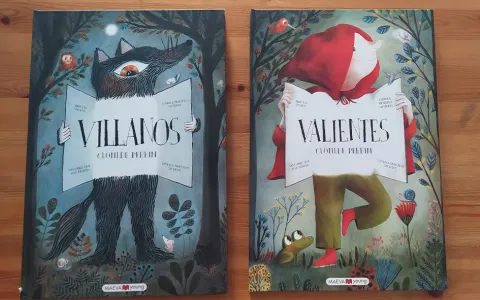
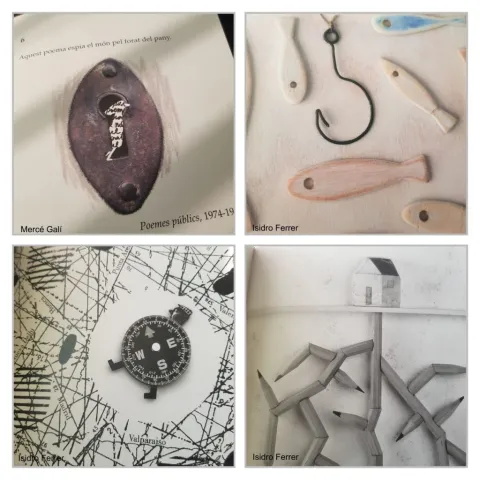
Today we are going to talk about children's poetry. We will see stories where poetry is the protagonist, we will review why this literary genre catches our attention so much and we will play at creating our own poems. Will you join us? A poem is a jewel that always attracts our attention. Why does this happen? Poetry takes advantage of the musical qualities of language, creating harmony and rhythm on one hand and on the other, it manages to express many things with few words, or even without words.
Did you know that there are poems without words? They are visual poems.
This is a reading promotion activity through art and play, which we carry out in the MACA Library in Alicante, led by Va de cuentos.
We offer you a proposal adapted to the online format, for those families who cannot attend in person. Today we invite you to a laboratory where we are going to create abstract works of art by playing with our knowledge of mathematics. Throughout this laboratory we will be looking for relationships between readings, figures and lines, calculations and equations, Elena Asins and her geometric paintings.