Watercolor in the illustrated album. Books, tricks and tips

Submitted by brandcode_deweloper on
Laboratory of Letters and Images. May 2022

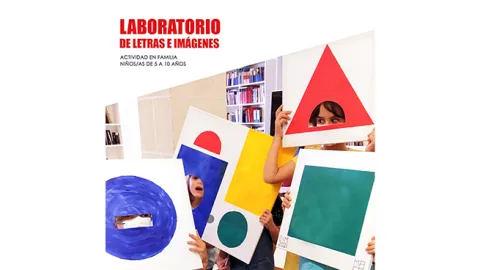
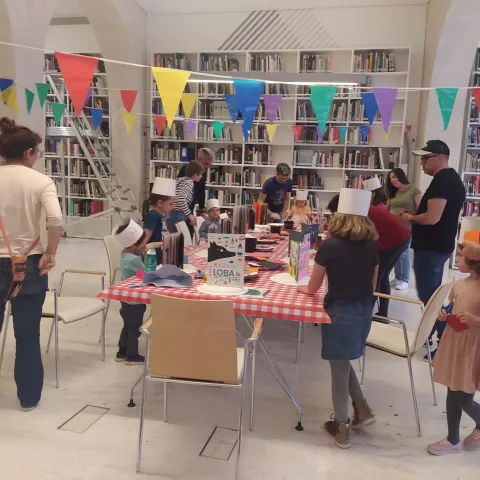
This is a reading promotion activity through art and play, which we carry out in the MACA Library in Alicante, led by María Maraña and Va de cuentos. We offer you a proposal adapted to the online format, for those families who cannot attend in person. In this workshop I want to tell you about watercolor, one of the most used techniques in illustration. I bring you some illustrated albums with watercolors and some books that explain tricks and tips to us.

Finally, we will see how to make our own watercolors and become color alchemists!.

ACTI-0499
Imagen
23.jpg
11:00 hours and 12:30 hours
60 minutes
Library

Forest Tales

Submitted by brandcode_deweloper on
Laboratory of Letters and Images. April 2022

This is a reading promotion activity through art and play, which we carry out in the MACA Library in Alicante, led by María Maraña and Va de cuentos. We offer you a proposal adapted to the online format, for those families who cannot attend in person.

The forest is a common setting in children's literature. The forest as a place of adventure, as a labyrinth, or as a hiding place.

In this laboratory we discover the forest as a complex and wonderful living being that feels, communicates and cooperates. It is not just a setting, but also a main character.

Through some informative picture books we will discover that sometimes science releases enough magic to feed our imagination.

ACTI-0498
Imagen
23.jpg
11:00 hours and 12:30 hours
60 minutes
Library

Tales of Dinosaurs and Other Prehistoric Creatures

Submitted by brandcode_deweloper on
Laboratory of Letters and Images. March 2022

This is a reading promotion activity through art and play, which we carry out in the MACA Library in Alicante, led by María Maraña and Va de cuentos. We offer you a proposal adapted to the online format, for those families who cannot attend in person.

Today we are going to travel back to remote times to meet dinosaurs, mammoths and cave art.

And we are going to do it by following the trail of TRACES OF THE PAST.

We know that a trace is a mark left on the ground by an animal or person when stepping. Although other things can also leave traces, such as the wheel of a bicycle or a car.

Traces can give us clues if we know how to look at them.

For example, when we see animal traces in the mud, we will know that it passed by there a short time ago. If we pay attention to its shape, we will be able to find out how big it is or whether it is a mammal or a bird.

ACTI-0497
Imagen
23.jpg
11:00 hours and 12:30 hours
60 minutes
Library

An elephant was swaying

Submitted by brandcode_deweloper on
Laboratory of Letters and Images. February 2022

This is a reading promotion activity through art and play, which we carry out in the MACA Library in Alicante, led by María Maraña and Va de cuentos. We offer you a proposal adapted to the online format, for those families who cannot attend in person. I'm sure you've sung this famous folk song at some point.

In today's laboratory we recall it to introduce the theme and the selection of illustrated albums for this session.

Throughout this laboratory we will be weaving connections between readings, elephants, balances, Alexander Calder and his moving sculptures.

Will we manage it?

ACTI-0496
Imagen
23.jpg
11:00 hours and 12:30 hours
60 minutes
Library

Red-haired Characters in Stories

Submitted by brandcode_deweloper on
Laboratory of Letters and Images. January 2022

This is a reading promotion activity through art and play, which we carry out in the MACA Library in Alicante, led by María Maraña and Va de cuentos. This year we dedicated our letter and image laboratories to mythical characters and some rather curious ones from stories, and that's why we couldn't miss the opportunity to focus on redheads. Yes, yes, you heard right. And it's striking how many characters with orange hair appear in stories. Have you ever noticed?

Think back, or review your library and you're sure to find more than one.

ACTI-0495
Imagen
23.jpg
11:00 hours and 12:30 hours
60 minutes
Library

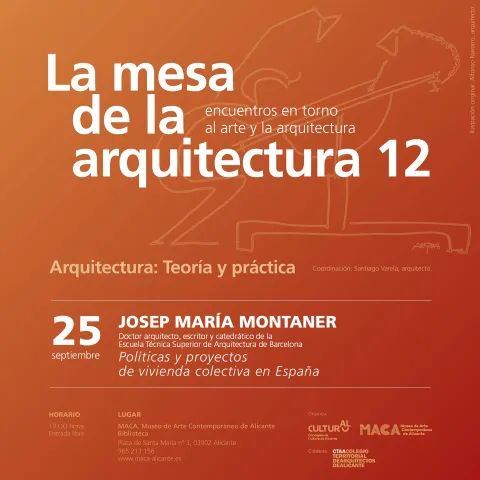
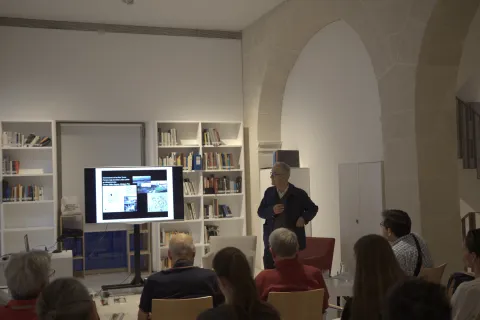
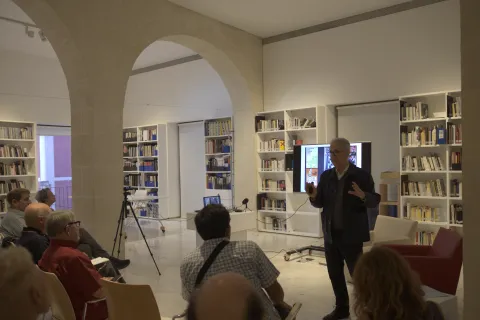
Policies and collective housing projects in Spain. Josep María Montaner

Submitted by brandcode_deweloper on
The architecture table12

Policies and collective housing projects in Spain. Josep María Montaner

Starting from the current framework of the new Law for the Right to Housing and the measures adopted in Spain, we will review throughout the twentieth century to understand the anomaly of the Spanish case, in relation to housing policies that, since the interwar period, were implemented in most European countries, also covering the period of the Franco dictatorship. Three are the dominant characteristics: absence of strategic and continuous policies; absence of regulations toward a little professional real estate sector; and emphasis on home ownership.

Furthermore, we will address the criteria and reference projects to face current challenges: specialize, make flexible, participate, industrialize, cooperate, and make housing affordable. To do this, we will resort to examples in Spain and housing policy in Barcelona from 2015 onwards.

In the general context, we will analyze the most urgent current measures: authentic housing policy; no to the disqualification of protected housing; and regulation of rentals in general and seasonal ones, to address the effects that the excess of tourism and tourist apartments are producing.

Coordinates: Santiago Varela

Collaborates: College of Architects of Alicante

ACTI-0485
Imagen
Banner-castellano-1080x1080-1.jpg
Desactivado
7:00 PM
90 minutes
Library

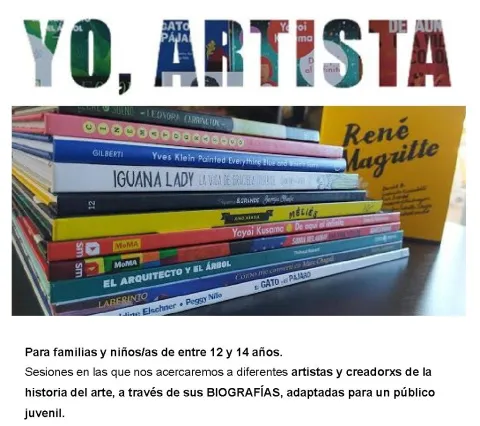
I, artist

Submitted by brandcode_deweloper on

Aimed at families with children aged 12 to 14 years old, these sessions aim to foster interest in the world of art and reading among an audience approaching adolescence who is beginning to understand the adult world while still from the innocence of childhood. The selection of books, mostly biographies, offers a certain fascination among the younger audience that is beginning to move away from children's literature. This pre-adolescence is a very interesting moment to offer tools for creation and exploration of the world, because by developing our artistic talent and acquiring culture and knowledge, we foster empowerment, self-esteem and open minds.

ACTI-0205
Imagen
YO-ARTISTA-MACA-2021-3.jpg
Two Wednesdays a month

Technical Innovation and Moral Decision. José María Lapuerta

Submitted by brandcode_deweloper on
The architect's desk 7

The architect's table is a cycle of encounters about art and architecture around a table where many projects have been drawn. A board, a paper, the tension: strokes and lines that belong to its memory and that are now revealed to bring us closer to the creators of spaces. The architect's table continues drawing....and we continue learning.

Since 2015, MACA has proposed a series of encounters in conversation format, around art and architecture. To reflect again on the relationships between architecture and art, to understand the process of construction and reconstruction of architecture from a more artistic or philosophical point of view, leads us to delve deeper into this proposal. In the MACA Library, the last Thursdays of each month, from September 2020 to May 2021.

The Museum of Contemporary Art of Alicante, whose collections are formed by works created fundamentally in the twentieth century, encompasses from the so-called avant-gardes to all the approaches and plastic manifestations that took place in the decades of the second half of the past century. Works expressed on different supports and materials, with diverse dimensions and techniques. Similarly, temporary exhibitions always related to these collections, allow us to expand or deepen some aspects of contemporary chronology. However, from the permanent collections and those temporary manifestations, contemporary architecture is absent.

The architecture of MACA itself, a project created and directed by Estudio Sancho Madridejos, is a beautiful building of great functional efficiency. The syncopated projection of horizontal and vertical spaces establishes a formal order based on the geometry and texture of the materials used in construction, while revealing a kind of tension resolved by the zenith path of light, a kind of "felt" spirituality more emotional than real.

The architect's table, a table from 1912, real and present (deposited by its owner Alfonso Navarro Guzmán at MACA), serves as an ideological foundation to link the conversations and serves as material support for drawings, sketches, plans and models so that we can travel, while dreaming, through the imagined space. The coordination of these encounters is in charge of Santiago Varela Botella, architect.

ACTI-0147
Imagen
401c08c6-e749-4bc6-9d2e-b0bb33354626.jpg
7:00 PM
90 minutes
Library

Without Limits. The Architecture of the Pioneers of the 21st Century. Carmen Espegel

Submitted by brandcode_deweloper on
The architect's desk 7

"Architecture is the transformation of a worthless brick into a golden brick," appears in Castilian texts as a phrase attributed to Alvar Aalto. Hanni Sippo, in Finland, gave us another version: "When used properly, the brick transforms into gold."

The palette of my architecture, of my craft, does not now have the color of the symbolic, nor of my personal desires. I find, instead, construction on all sides. Construction, of the physical and the sensible; abstract construction, ethical, moral…..We do not want our buildings to represent anything other than their own presence.

Construction that penetrates to the core of the project and that disappears as something separate from it. Construction as aspiration and not as necessity.

If materiality is not something external to the project, it can even participate in the relevant matters that society demands: creation of well-being, saving resources, building with less,… It will be then when materiality can transmit immaterial thoughts.

And to seek a formal identity, and a constructive identity and coherence. And that causes the minimum possible materials to question the origin of the project. Details should not entertain, distract, but help in the understanding of the totality of the project.

One must then tell the projects with plain language, without specialized jargon, without the usual neologisms taken from other disciplines. If it is so important from where we make constructive decisions, we will say that one builds by desire and by illusion. We will have memories and nostalgia of architectures and also anticipation. I am interested in employing material in a specific and sensitive way, without its cultural meanings. And, then, the material can acquire poetic qualities, because materials are not in themselves poetic.

Architecture as THE REPRESENTATION OF CONSTRUCTION". Because material is the concrete substrate and geometry is the abstract.

The nucleus of my architectural activity resides in the act of building. Building appropriate places for human activities and happiness. Because there can exist an ethical approach to constructive problems.

ACTI-0146
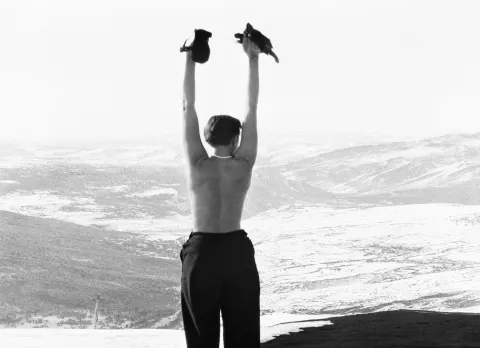
Charlotte Perriand in the mountains, 1930
Imagen
21CF07-WEB-scaled.jpg
7:00 PM
90 minutes
Library

The Tangible. Alfredo Payá

Submitted by brandcode_deweloper on
The architect's desk 7

"The Tangible" is part of a series of lectures that began with "the Invisible". If "the Invisible" was that which lies behind the works, "the Tangible" would be the concrete, the material,

the perceptible, the physical,… reality. A reality that is mass and space but also living matter. An approach to understanding architecture as an interaction of all sensory modalities.

ACTI-0145
Imagen
LAL5821-scaled.jpg
7:00 PM
90 minutes
Library